

Article by
Chris Niblett
With over 28 years of experience in IT and pre-sales roles, my transition into the hospitality and retail sectors has enabled me to help businesses of all sizes optimise their electronic payments and EPOS systems. My passion for service-driven solutions led me to create PenguinPay, where I provide tailored solutions that drive business success.
Securing sustainable business funding for restaurants shouldn’t force you to gamble personal assets against a quiet January. With traditional high street banks routinely turning away hospitality venues due to perceived industry volatility, operators are understandably weary of rigid loan repayments and opaque arrangement fees. You already know your dining concept works; you simply need working capital that respects the natural ebbs and flows of customer footfall.
This guide reveals the most viable funding options for UK restaurants, giving you the clarity to manage seasonal swings, kitchen refits, and site expansions with confidence. We will examine how modern, flexible facilities tie repayments directly to your daily card takings, ensuring you can invest in essential hardware and interior upgrades without taking on unmanageable risk.
Key Takeaways
- Clarify the operational distinction between short-term cash flow buffers and growth capital before committing to kitchen refits or multi-site expansion.
- Discover how tailored business funding for restaurants, such as merchant cash advances, adjusts repayments dynamically in line with daily card takings.
- Learn how to leverage integrated EPOS records and historical transaction data to strengthen your approval profile without placing personal assets at risk.
- Uncover why conducting a preliminary merchant account audit can eliminate wasteful overheads and improve borrowing eligibility before you apply.
Hospitality Capital Demands: Evaluating Your Restaurant Funding Requirements
Every commercial kitchen operates under relentless financial rhythms. Unlike traditional retail, where shelf stock retains value over months, hospitality relies on perishable inventory, immediate staff deployment, and shifting footfall. Operators seeking business funding for restaurants must first distinguish between immediate working capital cushions and long-term expansion capital.
Evaluating capital demands requires categorising your operational targets clearly:
- Cash flow buffers: Smoothing over seasonal cover dips, unexpected equipment breakdowns, or supplier payment gaps without draining reserves.
- Operational upgrades: Investing in commercial combi-ovens, dining room refurbishments, or modern, integrated EPOS terminals that accelerate table turnover.
- Multi-site growth: Securing premises leases, fit-out contracts, and initial marketing for ambitious new locations.
Traditional high street lenders routinely classify independent eateries as high risk. Between fluctuating dining habits and narrow margins, conventional credit models struggle to accommodate hospitality cash cycles. Applying the broader principles of corporate finance to dining operations helps operators select bespoke facilities that match their precise trading rhythm rather than settling for unyielding loan structures.
Balancing Operating Margins with Strategic Investment Needs
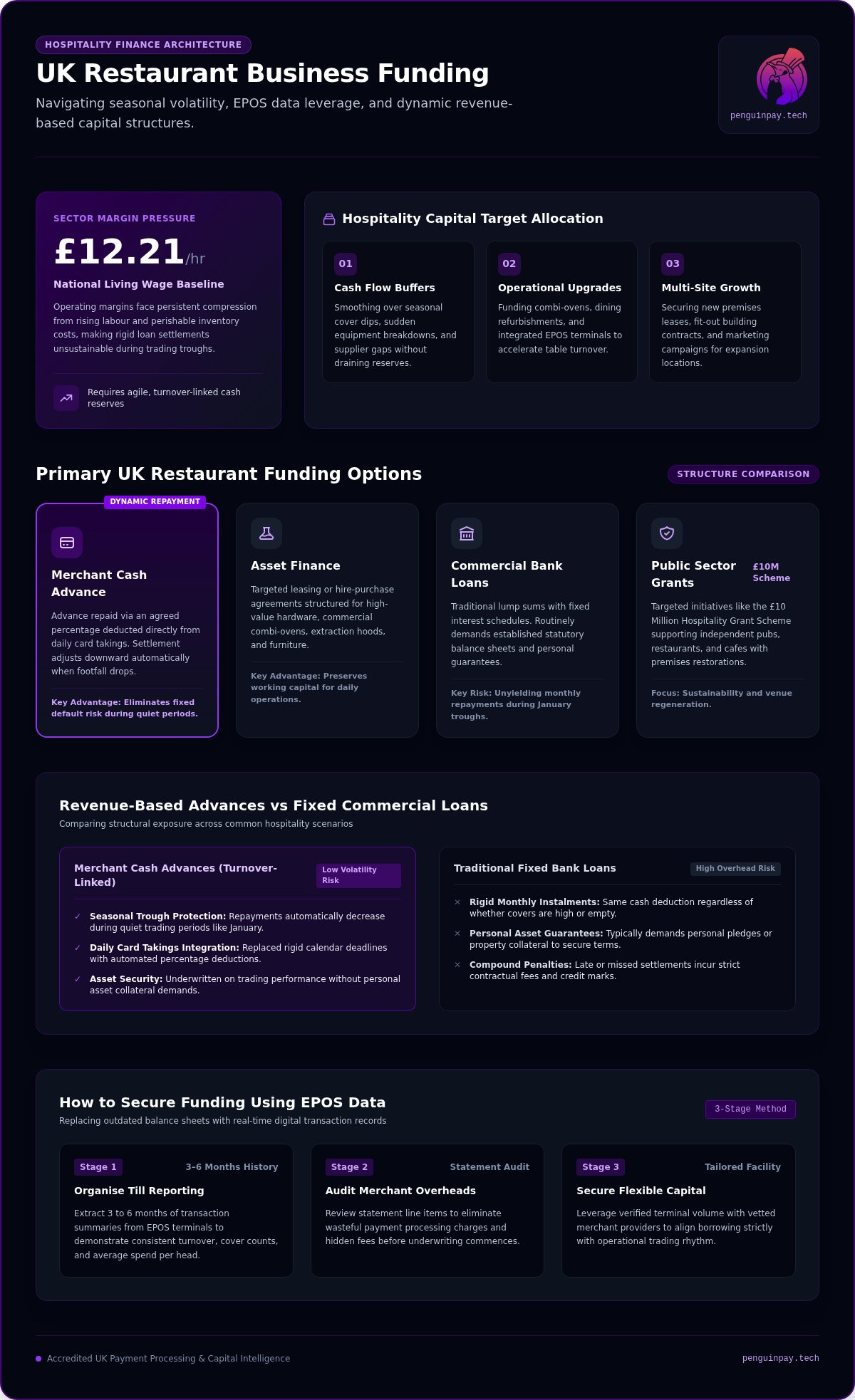
With food cost pressures and the National Living Wage at £12.21 per hour, margins face constant compression. Borrowing blindly to patch structural overheads risks compounding distress. Strategic capital investment protects restaurant resilience against trading volatility. Before committing to outside facilities, operators should audit existing payment processing costs alongside specialised business banking arrangements to reclaim lost margin, ensuring new debt directly fuels productive revenue growth.
Roundup: Top Business Funding Options for UK Restaurants
Selecting the right capital structure depends on how quickly your hospitality venture generates returns. The primary routes for business funding for restaurants include:
- Merchant Cash Advances (MCAs): An advance repaid via an agreed percentage deducted directly from daily card takings. When footfall dips, repayment amounts drop automatically.
- Asset Finance: Targeted leasing or hire-purchase agreements designed specifically for high-value hardware, such as commercial combi-ovens, extraction hoods, and bespoke dining furniture.
- Commercial Bank Loans: Traditional term debt offering lump sums with fixed interest schedules, though lenders typically demand established balance sheets and personal guarantees.
- Public Sector Initiatives: Dedicated programmes like the £10 million Hospitality Grant Scheme, which supports independent venues undertaking premises restorations and sustainability projects.
Comparing Revenue-Based Advances Against Fixed Commercial Loans
Fixed monthly instalments introduce unnecessary risk during seasonal trading troughs. When covers drop in January, traditional debt takes an outsized bite from operating cash. Turnover-linked advances flex alongside customer spend, shielding operators from rigid settlement dates and compound interest penalties.
Total cost transparency is essential before signing any commercial facility. By exploring routes through vetted, accredited payment providers, venues avoid punitive broker charges whilst maintaining complete control over cash reserves. If you want to determine which mechanism aligns with your seasonal trading cycles, you can speak with a specialist consultant to explore your options.
How to Secure Restaurant Funding Using EPOS Data
Most commercial lenders view hospitality through outdated credit checks that overlook real-time operational health. In contrast, modern business funding for restaurants leverages the granular data generated by your digital checkout point. Electronic till records demonstrate actual trading vitality far better than filed statutory accounts that may be months out of date.
Preparing to secure capital involves three methodical steps:
- Organise till reporting: Extract three to six months of transaction summaries to verify consistent turnover, cover counts, and average spend per head.
- Audit merchant overheads: Review statement line items through a trusted merchant account fee audit to eliminate unnecessary charges before underwriting begins.
- Seek tailored consultancy: Partner with an independent specialist across London, Leicester, Nottingham, or the Midlands rather than relying on automated broker portals that shop your credit file across inappropriate facilities.
Leveraging Your Daily Till Takings for Favourable Approvals
Clear transaction reporting significantly strengthens your borrowing profile. When operators present clean settlement data directly from fully integrated EPOS systems, underwriters can evaluate true trading velocity rather than relying on arbitrary balance-sheet formulas. Accurate card processing history serves as dependable collateral.
This verifiable data stream allows you to construct grounded cash flow projections that reflect seasonal dips. By mapping borrowing requirements against established restaurant financing options, independent operators retain complete control over repayments without staking personal residential property against commercial ambitions.
Strengthening Your Restaurant’s Financial Future
Securing external capital shouldn’t create operational strain. By matching repayments to daily card takings and leveraging clean EPOS records, operators gain access to sustainable business funding for restaurants without risking balance sheet stability. Taking time to audit merchant overheads beforehand ensures that borrowed facilities genuinely fuel growth, whether you’re refitting a commercial kitchen or preparing for your next venue.
With over 28 years of commercial IT and consultative pre-sales expertise, PenguinPay provides independent guidance to hospitality venues across London, Greater London, and the Midlands. When you are ready to explore tailored financing built around your trading patterns, speak with our UK hospitality funding specialists to review your options with confidence.
Frequently Asked Questions
How does a merchant cash advance differ from a traditional business loan?
A merchant cash advance ties settlements directly to your daily card revenue rather than demanding fixed monthly instalments. If your dining room has a slower evening, your repayment reduces proportionately. Traditional term loans require static sums regardless of turnover, making revenue-based business funding for restaurants far safer during seasonal dips.
Can a new UK restaurant secure funding without years of trading history?
Yes, newer venues can access capital by demonstrating steady card takings rather than multi-year accounting files. Alternative providers typically evaluate three to four months of consistent transaction activity through integrated till systems. Operators across London, Nottingham, and the Midlands can often qualify for revenue advances without long trading histories.
Will seasonal dips in trade affect my business funding repayment schedule?
With revenue-linked facilities, slower trading periods automatically lower your financial commitments. Because the lender deducts a pre-agreed percentage from daily till receipts, your operational cash remains protected during quieter trading months like January. Fixed commercial bank loans, conversely, demand the same monthly payment regardless of customer covers.
What paperwork do I need to prepare before applying for restaurant funding?
Securing modern business funding for restaurants requires minimal administrative overhead compared to conventional bank debt. You typically only need three to six months of recent merchant statements alongside electronic till summaries to demonstrate turnover. Lenders also review basic business banking activity to confirm identity and operational standing.