

Article by
Chris Niblett
With over 28 years of experience in IT and pre-sales roles, my transition into the hospitality and retail sectors has enabled me to help businesses of all sizes optimise their electronic payments and EPOS systems. My passion for service-driven solutions led me to create PenguinPay, where I provide tailored solutions that drive business success.
A polished checkout is only one part of a luxury payment experience. Omni-channel payment solutions connect payments across online and in-store channels, bringing customer communication, insight and retail payment terminals into a more consistent journey. The aim is to make it easier for customers to move between browsing, buying and returns without each step feeling disconnected.
Customers may discover an item online, visit a boutique to see it in person, then choose how and where to complete their purchase. A connected payment setup can support that journey while giving retail teams a clearer view of transactions across channels.
This guide explains what an omnichannel payments platform can include, how it connects payment experiences and terminals, and what to consider when choosing a solution. It also covers integration, customer insight and communication, so you can assess how this approach fits your retail operation.
Key Takeaways
- Map how customers move between online and in-store shopping, then identify where payment processes need to connect.
- Choose payment options around your customers’ preferences and make the experience consistent from purchase through returns.
- Compare UK providers by how their platforms integrate with EPOS and online systems, support reporting and meet security needs.
- Consider fully integrated EPOS systems when you want to bring retail payment processes into a more connected operation.
What is an omnichannel payments platform?
An omnichannel payments platform connects payment activity across online, mobile and physical retail channels. UK retailers with both boutiques and online stores may find it especially useful when customers move between them.
Payment Channels Across Customer Touchpoints
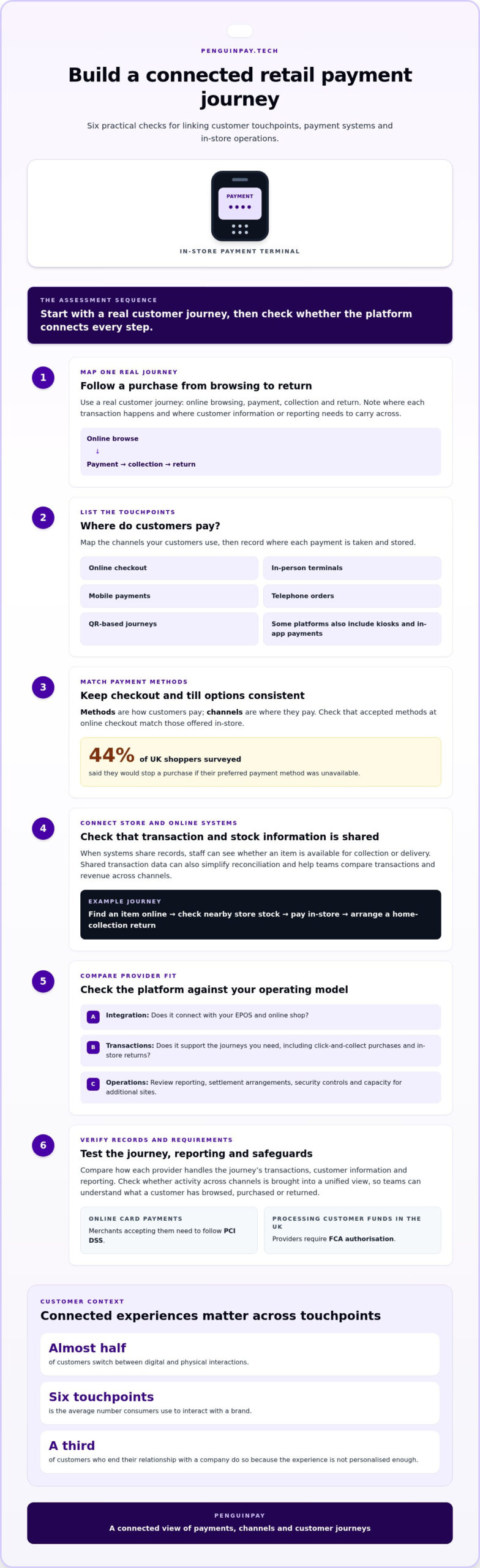
A connected setup can support online checkouts, in-person terminals, mobile payments, telephone orders and QR-based journeys. Some platforms also include kiosks and in-app payments. Start by listing the touchpoints your customers use, then map where each payment is taken and recorded. For example, a customer might browse on mobile before paying in a boutique.
Payment Methods Across Channels
Payment methods are how customers pay; channels are where they make the payment. A platform can bring card payments and other accepted methods together across online and in-person journeys. Check that the payment methods available at checkout match those offered at the till. If a customer chooses an item online but completes the purchase in-store, a consistent payment process can help the experience feel connected.
Integration matters beyond the checkout. When online and store systems share transaction and stock information, staff can see whether an item is available for collection or delivery. For example, a customer could find an item online, check nearby store stock, pay in-store and later arrange a home collection return. Shared records can also simplify reconciliation, helping teams compare transactions and revenue across channels. The platform’s payment gateway can support card-detail handling, tokenisation, fraud checks, authorisation and settlement, while a unified view helps connect each transaction to its customer journey.
Consistency, convenience, communication and customer insight
The four C’s of omnichannel retail are consistency, convenience, communication and customer insight. Together, they help retailers connect payment processing with the wider customer experience.
A Unified View of Customer Interactions
Almost half of customers switch between digital and physical interactions, so disconnected records can obscure their relationship with a retailer. A unified view brings activity across channels together, helping teams understand what a customer has browsed, purchased or returned. Check whether reporting connects those interactions and whether staff can access relevant information when assisting customers. That context can make communication more consistent, from an online enquiry to an in-store conversation.
Customer Preferences and Checkout
Convenience means giving customers suitable ways to complete a purchase, rather than offering every possible payment method. In a recent survey of UK shoppers, 44% said they would stop a purchase if their preferred payment method was unavailable. Compare the methods offered across digital and physical checkouts, then identify gaps in the customer journey. A consistent omni channel payment experience makes it easier to move between channels without encountering a different process at each step.
Customer insight can also shape more relevant communication. Retailers can use purchase histories and preferences to tailor marketing, such as sharing information about a product category a customer has browsed. Consumers use an average of six touchpoints to interact with a brand, while a third of customers who end their relationship with a company do so because the experience is not personalised enough. Review reporting for patterns across those interactions, then use the insight to improve service and offers. Explore how connected payment experiences can support a more consistent customer journey with PenguinPay.
Which omnichannel payment providers operate in the UK?
The UK market includes payment gateways, merchant acquirers and providers that combine payments with retail systems. Their roles differ: a gateway routes online transactions, while an acquirer processes card payments for a merchant. Some platforms connect online checkout with physical tills and reporting. For a luxury retailer, the key question is whether a provider can link the channels customers actually use.
Compare providers against your operating model, not just the number of channels they support. Check how each platform integrates with your EPOS and online shop, and whether it supports the transactions you need, such as click-and-collect purchases and in-store returns. Assess reporting, settlement arrangements, security controls and capacity to support additional sites. These details help show whether a provider can connect the purchase journey.
Security and regulation also shape the decision. Merchants accepting online card payments need to follow PCI DSS. Providers processing customer funds in the UK require FCA authorisation. Card payments are the UK’s most popular payment method, while open banking payments are growing in online retail. Weigh these options against your customers’ preferences and checkout requirements.
Before selecting a platform, map one real customer journey, from online browsing to payment, collection and return. Then compare how each provider handles the associated transactions, customer information and reporting. This practical test helps reveal disconnected processes that a feature list may not show. For support assessing your retail payment requirements, discuss your payment setup.
UK omnichannel payment options include payment gateways, merchant acquirers and providers that combine payments with retail systems. Some platforms link online checkout with physical tills and reporting.
PenguinPay: Fully Integrated EPOS systems
PenguinPay offers Fully Integrated EPOS systems for retailers looking to bring point-of-sale operations into a more connected payment setup. This can help when reviewing how in-store transactions fit alongside online sales and customer journeys.
For boutique purchases, Face-to-Face Card Payments support in-person transactions, while E-commerce gateways provide an option for online sales. Business Banking is also available from PenguinPay. The right combination depends on the channels your retail operation uses and how you want to organise payment processes.
If you’re planning to connect your retail payment setup, contact PenguinPay to discuss your requirements.
Shape your next retail payment step
As your retail operation evolves, review how payment choices support the experience you want customers to have. The right omni-channel payment solutions should fit your boutique’s priorities and leave room to refine processes as customer behaviour changes. Start by identifying where teams need clearer payment workflows, which channels require closer coordination and what information would help guide future decisions.
PenguinPay offers Fully Integrated EPOS systems, Face-to-Face Card Payments and Business Banking. These services can support a considered approach to organising retail payments and business operations. The next step is a conversation focused on your requirements, without adding complexity for its own sake.
Contact PenguinPay about payment solutions to discuss the approach that suits your retail business. A thoughtful review can help you move forward with greater clarity and confidence.
Frequently Asked Questions
What is an example of an omnichannel?
A fashion retailer offering online reservations alongside boutique purchases is one example. A customer could reserve a coat online, try it on in-store, then pay at the till. If they later need a different size, the retailer can manage the exchange through its usual customer service process. The aim is for each interaction to feel connected, rather than like a series of separate transactions.
What makes a company omnichannel?
A company is omnichannel when its sales channels and customer interactions work together, rather than operating as isolated services. For example, a retailer’s online team and boutique staff can access relevant order information when helping a customer. Shared processes, records and communication help customers continue their journey between channels without having to start again.
Will an all-in-one payment solution connect with my current cash registers?
Integration is possible when the payment platform and cash register are compatible. Before changing systems, identify your register’s make and software, then assess how transaction details, refunds and end-of-day records would pass between systems. PenguinPay offers Fully Integrated EPOS systems for retailers reviewing tills in London and the Midlands.
What are omnichannel payment solutions?
Omnichannel payment solutions coordinate payment activity across a retailer’s sales channels, helping customers move between them with less friction. For instance, a customer might place an order through an online shop and contact the retailer by telephone to resolve a payment query. The business can then manage the interaction through its connected payment processes.
What payment methods and sales channels do omnichannel solutions support?
Supported options vary by platform and retailer, but may include card payments across online shops, mobile checkouts and in-person tills. Some setups also support telephone orders, QR payments, kiosks or in-app purchases. Retailers can choose methods that suit their customers and operations, then consider how each channel records transactions for sales and customer service teams.