

Article by
Chris Niblett
With over 28 years of experience in IT and pre-sales roles, my transition into the hospitality and retail sectors has enabled me to help businesses of all sizes optimise their electronic payments and EPOS systems. My passion for service-driven solutions led me to create PenguinPay, where I provide tailored solutions that drive business success.
Your legal structure can shape the banking steps a startup needs to take. In the UK, limited companies generally need a business bank account, while other small businesses aren’t legally required to have one. A well-planned business banking setup for startups helps organise business transactions and provides an account for receiving and making payments.
It’s understandable to want clarity before applying. This guide explains what a startup business account can offer, what business and identity information an application may require, and how your legal structure affects the process. It also sets out how to approach a business banking setup for startups with a clear view of the steps and decisions involved.
Key Takeaways
- Understand how a dedicated business account can help organise your startup’s incoming and outgoing payments.
- See what business details and identity checks may form part of an account application.
- Learn why your legal structure can affect the documents and account arrangements involved.
- Explore how PenguinPay’s business banking can support your setup alongside payment services as your needs develop.
What is a start-up business bank account?
A startup business bank account gives your venture a dedicated place to receive customer payments and manage transactions. A considered business banking setup for startups should reflect your business structure, planned spending and payment needs, rather than focusing on an account’s name alone.
Eligibility and founder residency
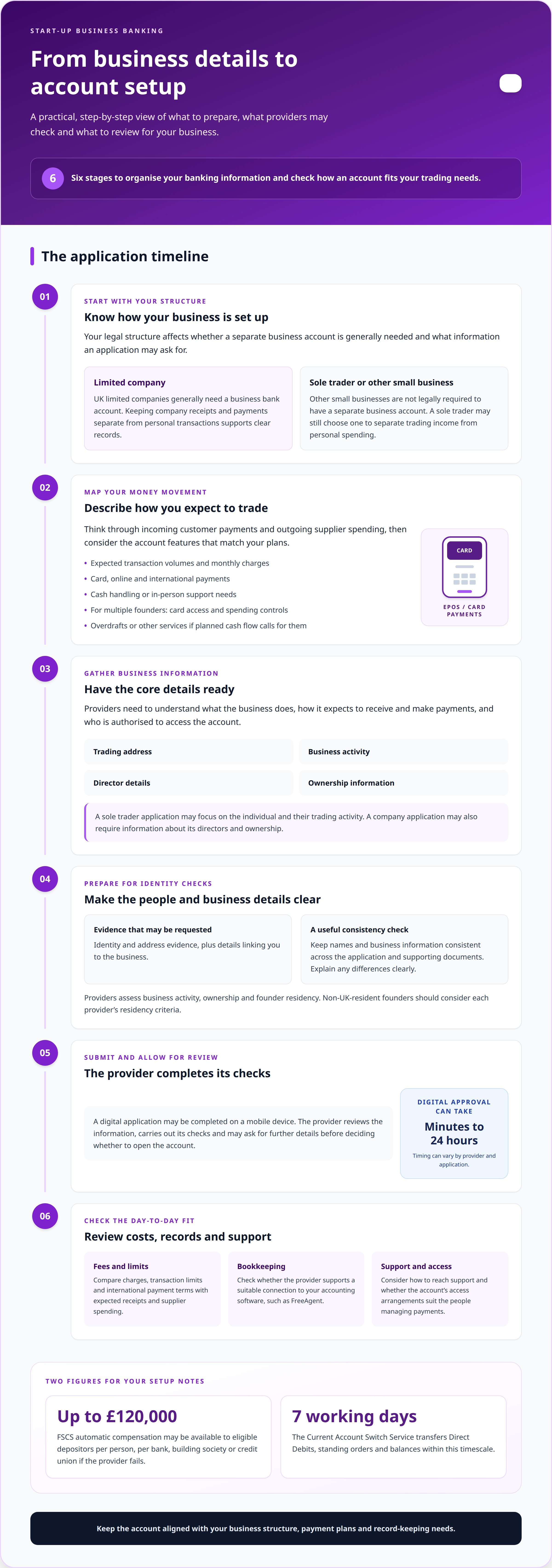
Providers assess business activity, ownership and founder residency. Prepare the trading address, business activity, director details and ownership information; identity and address evidence may also be requested. Non-UK-resident founders need to consider each provider’s residency criteria. The £25 million annual turnover or income figure, excluding VAT and other turnover-related taxes, defines SMEs in a Savanta survey, not a universal account eligibility threshold.
Account features for startup teams
A provider can help compare accounts against expected transactions, international payments and team needs. For multiple founders, look at card access and spending controls. Consider accounting software connections and invoicing features, too. Digital account approval can take from minutes to 24 hours. Digital-only banking may not suit a startup that relies on cash handling or in-person support. An overdraft or other banking service may be relevant when planned cash flow calls for it.
Deposit protection, fees and limits
According to the Financial Services Compensation Scheme (FSCS), eligible depositors can receive automatic compensation up to £120,000 per person, per bank, building society or credit union if the provider fails. A business banking setup for startups should account for how fees and transaction limits fit expected payment volumes. Compare charges, limits and international payment terms against planned customer receipts and supplier spending before choosing an account.
Application requirements and identity checks
A UK founder’s application usually combines business details with checks on the people who own or manage the business. The provider needs to understand what the business does, how it expects to receive and make payments, and who is authorised to access the account. A sole trader’s application may focus on the individual and their trading activity, while a company application may also require information about its directors and ownership.
Start by outlining your business structure and banking needs, then provide the requested business and identity details. The provider reviews your application, completes its checks and explains if it needs further information before deciding whether to open the account.
Identity checks help a provider establish who is applying and who controls the business. You may need to provide identity and address evidence, along with details linking you to the business. Keep names and business information consistent across your application and supporting documents. If any details differ, explain why clearly rather than leaving the provider to resolve the discrepancy.
Before applying, consider how the account will handle card and online payments, international transactions and monthly charges. You may be able to complete a digital application on a mobile device, but make sure you understand how to reach support if an issue arises. Review transaction terms and charges against your business’s expected use.
Also consider how account information will fit into bookkeeping. If the business uses FreeAgent, for example, identify whether the provider supports a suitable connection before relying on it for reconciliation. Clear records can make it easier to track business spending and prepare accounts. For help aligning banking with payment needs, discuss your setup.
Business banking and legal structure
Your legal structure affects whether a separate business account is generally needed and how it relates to your trading activity. UK limited companies generally need a business bank account, while other small businesses aren’t legally required to have one. For a limited company, keeping company receipts and payments separate from personal transactions supports clear financial records.
Sole traders and limited companies therefore have different considerations. As a sole trader, you may choose a business current account to separate trading income from personal spending, even though there’s no legal requirement to do so. A registered limited company should consider whether its account name and records align with the company’s identity. The provider’s eligibility criteria also matter, including its requirements for business activity and ownership.
Your structure also affects how banking fits into day-to-day administration. For example, a company may need account access that reflects who can approve payments, while a sole trader may prioritise straightforward access and bookkeeping. Check whether the account’s software connections suit your accounting process, and consider how deposits, supplier payments and customer receipts will be recorded.
If your startup changes structure or moves to another business bank, plan the transition around regular payments. The Current Account Switch Service transfers Direct Debits, standing orders and balances within seven working days. That can help organise a move, but review which payments and account details need updating for your trading arrangements. To discuss how business banking fits your startup’s structure, talk through your banking requirements.
PenguinPay: Business Banking
PenguinPay offers Business Banking for startup founders planning their banking and payment arrangements. It can be a natural next step if you want to consider banking alongside how your business accepts customer payments and manages sales.
For in-person transactions, Face-to-Face Card Payments and Fully Integrated EPOS systems may also be relevant. If you sell online, E-commerce gateways can support your online payment needs. Considering these services together can help you see how banking and payment arrangements fit your trading model.
Share your business needs and how you expect to take payments so the conversation can focus on what matters to your setup. Contact PenguinPay to discuss Business Banking for your startup.
Set up banking to support your next stage
As your startup begins trading, its payment needs may change with customer habits, sales channels and team responsibilities. Treat banking as part of your wider operating plan, then review whether your arrangements still suit the way money enters and leaves the business. A considered business banking setup for startups can provide a practical foundation while leaving room for the business to evolve.
PenguinPay offers Business Banking, Fully Integrated EPOS systems and Face-to-Face Card Payments. Discussing these needs together can help you consider how banking and in-person payments fit your operation. Start with a focused conversation about your business model and priorities.
Contact PenguinPay about startup banking to discuss what your business needs as it develops. A clear plan now can help you move forward with greater confidence.
Frequently Asked Questions
FAQs about this account?
A startup business bank account gives your business a dedicated place to receive income and make payments. For example, its transaction history can help you distinguish supplier costs from customer receipts when reviewing cash flow. Consider who needs account access and how the account’s records will support your bookkeeping as trading grows.
What documents do UK startups need to open a business bank account?
Prepare business details, director and ownership information, and identity and address evidence for the people involved. A limited company may also be asked for its registered details, while a sole trader may need to explain their trading activity. Requirements vary by provider, so keep application details consistent with your business records and be ready to clarify discrepancies.
Can a UK startup open a business bank account before registering with Companies House?
You can explore account options and prepare application information before registration, but opening an account in a limited company’s name beforehand depends on the provider’s process. An unregistered venture may need a different application route from an incorporated company. Confirm which business structure the application should reflect so the account details correspond to the entity that will trade.
What are the eligibility rules for non-UK-resident founders opening a UK business account?
Eligibility depends on the provider’s residency criteria and your startup’s circumstances. If you’re a non-UK-resident founder, establish which directors or owners must complete identity checks, what address evidence is accepted, and whether the business’s UK registration or trading arrangements meet the provider’s criteria. Clarifying these points early helps you prepare a complete application and avoid inconsistent details.