

Article by
Chris Niblett
With over 28 years of experience in IT and pre-sales roles, my transition into the hospitality and retail sectors has enabled me to help businesses of all sizes optimise their electronic payments and EPOS systems. My passion for service-driven solutions led me to create PenguinPay, where I provide tailored solutions that drive business success.
Retail loan eligibility depends on more than your busiest sales period. Lenders commonly assess your trading history, credit profile, intended use of funds, affordability and available security, including whether repayments remain manageable during quieter months. Business funding for retail can help eligible businesses cover needs such as stock purchases, supplier payments or cash-flow gaps.
It’s understandable to want clarity before applying, particularly when seasonal income makes repayments harder to plan. This guide explains which retailers may benefit from funding, who can apply for working capital and what lenders consider when assessing eligibility. You’ll also learn how funding options differ, so you can compare the borrowing amount, repayment structure and fit with your trading pattern before deciding what to do next.
Key Takeaways
- Match borrowing to a clear retail need, from seasonal stock to equipment or e-commerce improvements.
- Working capital can help cover day-to-day costs when sales dip or supplier payments fall due.
- Compare repayment structures and consider how they fit your quieter trading periods before choosing finance.
- Trading history, credit profile, affordability and card sales can all influence which funding routes may suit your business.
Who can benefit from retail business funding?
Independent shops and online retailers may need capital for stock, premises, equipment or cash flow. Estimate the amount by listing each cost, then test repayments against projected sales, including quieter trading months.
Funding for stock, premises and working capital
Business funding for retail can cover seasonal stock, rent, wages and supplier bills when customer payments arrive later. For example, retailers may need to pay suppliers for seasonal stock well before customers buy it. Match the borrowing amount to the specific cash-flow gap, rather than treating available capital as general spending money.
Inventory finance may be secured against incoming or existing stock, while a secured loan can use property or equipment as collateral. Before accepting an offer, identify whether it involves stock security, other assets or a personal guarantee, and understand the responsibilities that come with it.
Finance for refits and expansion
Retail businesses may use finance to refurbish premises, open another site, buy equipment or improve e-commerce and payment technology. A shop refit, for instance, may involve costs that fall due before the upgraded space begins trading.
A retailer seeking business funding for retail should consider whether a term loan or another type of finance fits the project’s timing and repayment pattern. For expansion, set out the planned costs and expected effect on cash flow. From independent shops to online sellers, retailers can use this assessment to tie borrowing to a defined business purpose.
Start-up cash flow and stock costs
A start-up may need to pay for initial stock, premises and equipment before regular sales begin. Build a forecast that separates one-off setup costs from ongoing outgoings, such as supplier payments and rent, then compare these with expected sales income.
Seasonal trading can create further pressure: sales may rise around Christmas or summer, then fall in January or autumn. Include quieter periods when judging affordability, and account for when stock purchases are due. This gives retailers a clearer estimate of the funding required and whether repayments fit projected cash flow.
Who Can Apply for a Business Working Capital Loan?
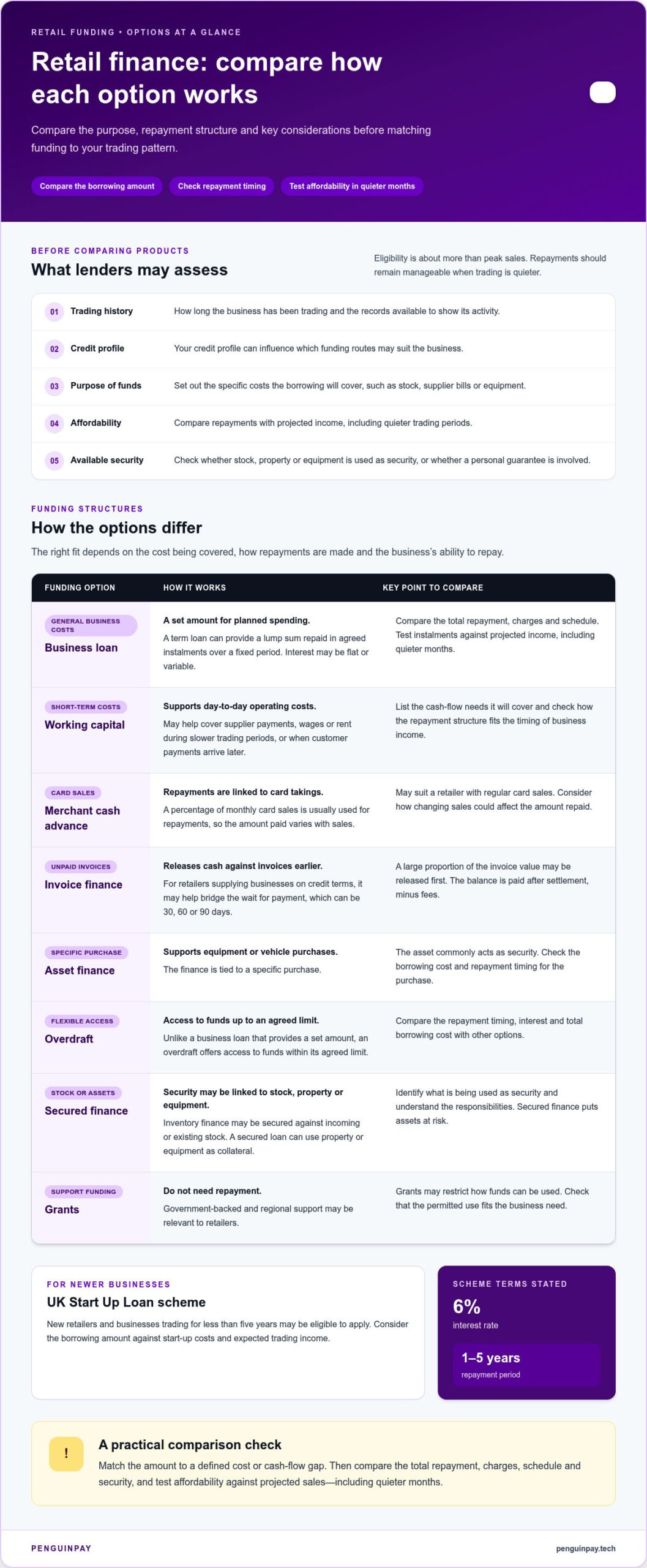
Retailers can apply for working capital to meet short-term business costs, with lenders assessing affordability and trading history. The right loan depends on its purpose, repayment structure and the business’s ability to repay.
Rates and fees vary by loan and lender, so compare the total repayment, charges and schedule before borrowing. The UK Start Up Loan scheme has a 6% interest rate and a repayment period of 1-5 years.
Working capital loans for retailers
A working capital loan provides funds for operating costs such as supplier payments, wages or rent during slower trading periods. Unlike finance for a specific asset, it can help cover several short-term cash-flow needs.
Retail businesses can use a term loan to receive a lump sum and repay it in agreed instalments over a fixed period. Interest may be flat or variable. Before applying, list the costs the loan will cover and assess whether repayments fit projected income, including quieter months.
Funding for established and new retailers
Established retailers may apply for business loans to fund stock, planned costs or growth. Lenders commonly assess trading history, credit profile, loan purpose, affordability and available security. Prepare a clear account of how you’ll use the funds and how the business will meet repayments.
New retailers and businesses trading for less than five years may be eligible to apply for a UK Start Up Loan. Consider the borrowing amount against start-up costs and expected trading income.
Whether you choose a fixed-term loan or a more flexible repayment structure, compare the total cost and timing of repayments. Before applying, organise cash-flow forecasts, trading records and a breakdown of planned spending.
Am I Eligible For A Retail Business Loan?
Eligibility depends on trading history, credit score, loan purpose, affordability and available security. Lenders also assess whether repayments remain manageable during quieter trading periods, not just peak sales months.
A merchant cash advance may suit a retailer with regular card sales. Repayments are usually linked to a percentage of monthly card takings, so the amount paid varies with sales.
Invoice finance can help retailers supplying other businesses on credit terms. Rather than waiting 30, 60 or 90 days for invoice payment, a retailer may release a large proportion of the invoice value earlier, with the balance paid after settlement, minus fees. Asset finance is different: it supports equipment or vehicle purchases, with the asset commonly acting as security.
A business loan provides a set amount for planned spending, while an overdraft offers access to funds up to an agreed limit. Invoice finance advances cash against unpaid invoices; asset finance is tied to a specific purchase. Compare repayment timing, interest and total borrowing cost before choosing.
Government-backed and regional support may also be relevant. Grants do not need repayment, but may restrict how funds are used. Finance can help retailers invest in premises or stock, but borrowing adds repayment commitments, and secured finance puts assets at risk.
To discuss funding options for your retail business, contact PenguinPay.
PenguinPay: Fully Integrated EPOS systems
PenguinPay offers Fully Integrated EPOS systems for retailers reviewing their in-store payment setup alongside funding needs. If your plans involve a shop refit, new premises or more online sales, consider how payment systems will fit into day-to-day trading.
PenguinPay also offers Face-to-Face Card Payments, E-commerce gateways and Business Banking. These services can help you organise how customers pay in person or online and manage business finances. The right combination depends on how your retail business operates and the payment channels it uses.
Once you’ve assessed your funding needs and repayment capacity, consider whether your payment arrangements also support your plans. Book a free, no-obligation consultation with PenguinPay to discuss your retail business.
Plan your next retail move with confidence
The value of business funding for retail depends on how well it supports your next business decision. Before moving ahead, consider how your plans connect with daily operations, from accepting payments to managing business finances. A clear view of those needs can help you decide what to address first and keep growth plans grounded in the way your shop trades.
PenguinPay offers Business Funding alongside Fully Integrated EPOS systems, Face-to-Face Card Payments and Business Banking. These services can support retailers considering funding as part of a broader review of their payment and banking setup.
Take the next step at a pace that suits your business. Contact PenguinPay to discuss funding and explore how your retail plans could move forward.
Frequently Asked Questions
Why is financing important in the retail sector?
Finance can give retailers room to manage the gap between spending and sales income. It can also support investment in areas that shape customers’ experience, such as shop equipment or online sales channels. If you’re planning changes, compare the expected business benefit with the repayment commitment and protect funds needed for routine trading.
Am I Eligible For A Merchant Cash Advance?
Eligibility commonly depends on trading history and card revenue. Lenders also consider affordability and business performance. Prepare recent card sales records so your application clearly shows the income used to assess repayments.
How to finance your retail business: what next?
Start by defining the expense, the amount required and when you need the funds. Then compare repayment structures against projected income, and organise supporting records. Applications may require bank statements covering the past 12 to 24 months and tax returns for the past two years. Retailers in London, Nottingham or Leicester can use these records to present a clear picture of trading.
Is a shop loan secured on my stock?
Not every shop loan is secured on stock. An unsecured business loan does not require assets as security, while inventory finance can be secured against incoming or existing stock. Check which assets the specific facility uses as collateral and whether the agreement includes a personal guarantee. This distinction matters because security affects what the lender can claim under the loan terms.
Which finance is best for buying stock before Christmas?
Inventory finance can suit a large seasonal order because it may be secured against the stock being purchased. A term loan is another option if you need a lump sum and prefer agreed instalments. Compare the repayment schedule with expected sales and quieter months after Christmas. Choose an amount tied to the order and cash-flow plan, not just the busiest trading forecast.