
Article by
Chris Niblett
With over 28 years of experience in IT and pre-sales roles, my transition into the hospitality and retail sectors has enabled me to help businesses of all sizes optimise their electronic payments and EPOS systems. My passion for service-driven solutions led me to create PenguinPay, where I provide tailored solutions that drive business success.
A payment should not feel like a separate journey just because a customer switches channels. Omnichannel payment solutions in the UK connect in-store, online, mobile, telephone and QR-code payments through a unified platform, linking transactions to a shared backend. This lets different payment methods work together as part of one customer experience, rather than as isolated channels.
It is easy to focus on whether each payment method works reliably, but it is also important to consider how channels work together, from purchase to returns and refunds. This article explains omnichannel payments, how a unified platform can bring processing and reporting into one view, and what that can mean for retail, hospitality and franchise businesses. It also looks at everyday operations, so you can assess where a more connected payment journey could fit your business.
Key Takeaways
- Map how customers pay across online, in-store, mail-order and telephone channels to see where a more connected payment journey could help.
- Consider how point-of-sale and commerce platform integrations can bring transaction handling and reporting into a clearer, more unified view.
- Explore how connected payment journeys can support retail returns, hospitality service and consistent processes across franchise locations.
- For businesses taking payments in person, assess how face-to-face card payments and an integrated EPOS system could fit their wider operations.
What are omnichannel payments?
Omnichannel payments connect a business’s payment channels through shared processing, helping customers move between digital and physical shopping.
Payment acceptance across channels
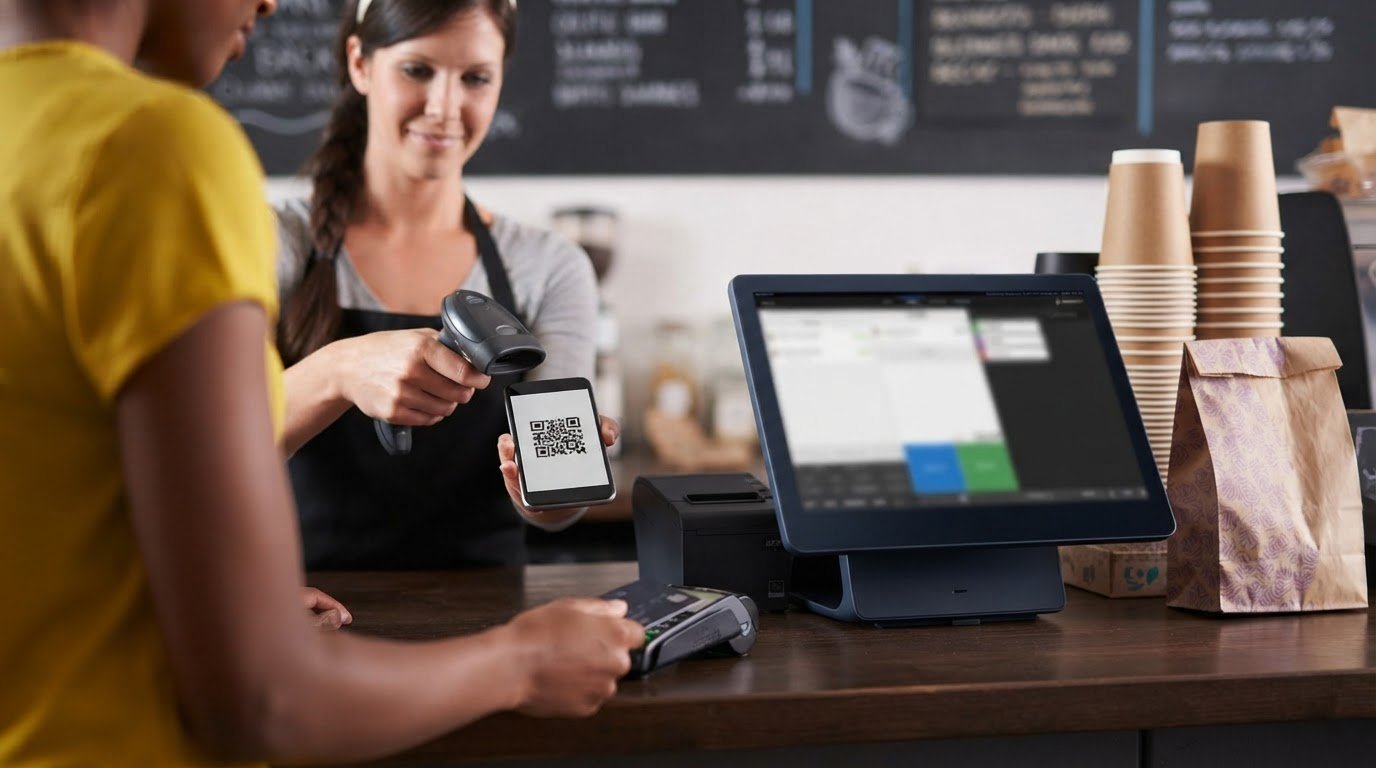
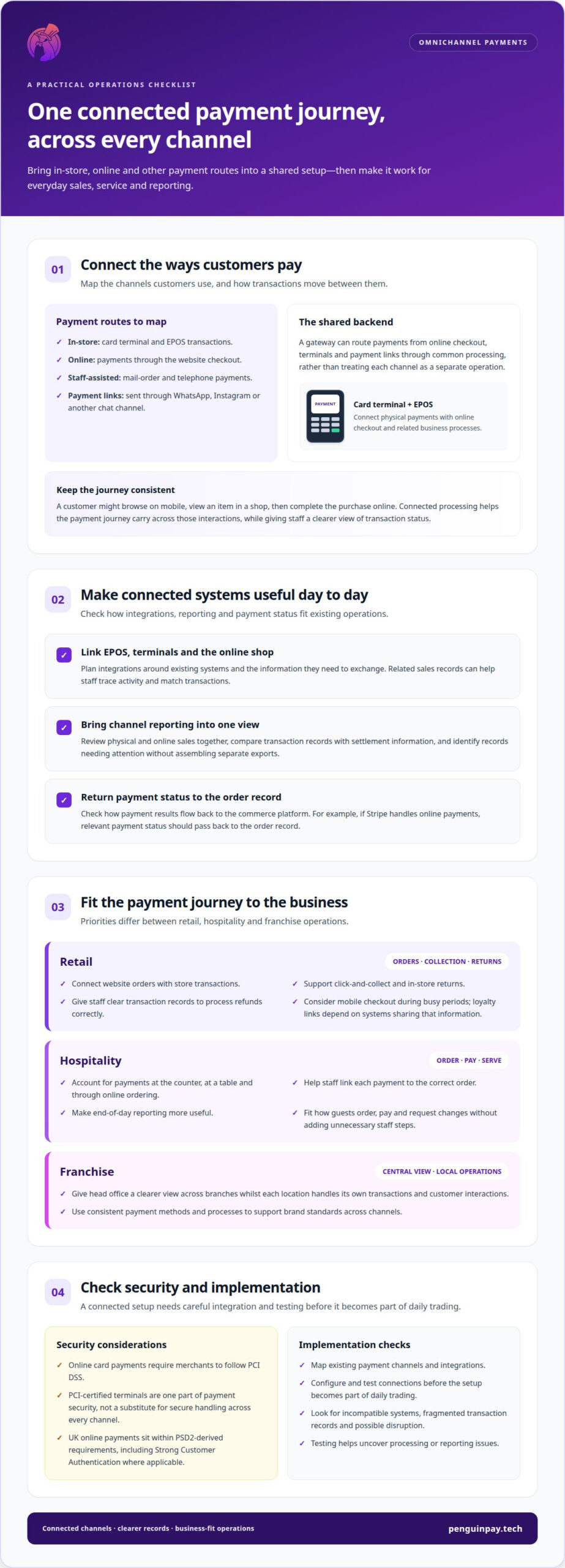
Payment acceptance across channels means taking payments online, in-store, by mail order and over the telephone. A retailer might use a card terminal in-store, a gateway for online checkout, and telephone processing for an order placed with staff. Payment links add another route: a business can send a customer a link through WhatsApp, Instagram or another chat channel. UK online payments sit within PSD2-derived requirements, including Strong Customer Authentication (SCA), where applicable. According to the Financial Conduct Authority, since 14 September 2019, rules have applied to how payment service providers check account access and payment permission.
Customer journeys across channels
A customer journey across channels runs from discovering a product to paying, collecting or returning it. Someone might browse a retailer’s website on mobile, visit a shop to view an item, then complete the purchase online. A connected setup helps the payment process carry across those interactions. This matters when customers switch channels mid-purchase or need support after paying.
A consistent payment experience
A consistent payment experience gives customers familiar ways to pay, even when they switch channels. Clear payment steps and familiar options, for example, can help a customer move from a social media conversation to checkout. Consistency also helps staff understand a transaction’s status across the business. Disconnected processes can cause confusion, extra handling and uncertainty about whether payment is complete.
A shared payment backend
A shared backend links transactions from different channels to common payment processing, rather than treating each channel as a separate operation. A gateway can route payments from online checkout, terminals and payment links through this connected setup. During implementation, the provider maps existing channels and integrations, then configures and tests the connections. Challenges can include incompatible systems, fragmented transaction records and disruption during integration. Thorough testing helps identify processing or reporting issues before the setup becomes part of daily trading.
How does a unified payments platform help my business?
A unified platform links physical point-of-sale transactions with online checkout. Its value depends on how well its integrations, payment methods and reporting fit your operations.
Point-of-sale and commerce integrations
Point-of-sale and commerce integrations link an EPOS system, card terminals and an online shop, allowing transactions to feed into related business processes. This can reduce separate handling of physical and digital sales. For example, staff may be able to view a terminal payment and an online order together, helping them trace activity and match sales records. Plan integrations around existing systems and the information they need to exchange.
PCI-certified terminals are just one part of payment security, not a substitute for secure handling across every channel. Online card payments require merchants to follow the Payment Card Industry Data Security Standard (PCI DSS). Implementation should account for how terminal and checkout integrations handle transaction data, and where responsibilities sit across the connected setup.
Unified reporting and payment methods
Unified reporting brings transactions from connected channels into one view, making reconciliation easier to manage. A retailer can review physical and online sales together, then compare transaction records with settlement information. Clear reports help the business understand revenue by channel and identify records that need attention, without assembling separate exports from each system.
Payment integrations also determine which methods appear at checkout and how transaction results return to the commerce platform. If Stripe handles online payments, the integration needs to pass relevant payment status back to the order record. Map this connection alongside the business’s other payment methods, so staff can follow orders consistently without treating Stripe as a separate reporting process.
For a tailored view of EPOS and commerce integration options, discuss how your existing systems and reporting needs fit together.
Retail, hospitality and franchise payments
Retail, hospitality and franchise businesses use payment channels differently, so their systems should reflect day-to-day operations. A shop may prioritise collection and returns, while a restaurant needs efficient service and a franchise needs consistent processes across locations.
For retail, connect website orders with store transactions to support click-and-collect and in-store returns. A customer might buy online, collect from a branch and return the item there; staff need clear transaction records to process the refund correctly. Mobile checkout can also help during busy periods. Payment methods across channels should suit how customers complete purchases, and linking loyalty records to purchases depends on the systems sharing that information.
Hospitality has a different rhythm. A restaurant may take payments at the counter, at a table or through online ordering. Connected processing can help staff link each payment to the correct order, reducing confusion during service and making end-of-day reporting more useful. The practical test is whether the payment journey fits how guests order, pay and request changes, without adding unnecessary steps for staff.
For a franchise, the priority is often balancing central reporting with local operations. A shared setup can give head office a clearer view across branches while each location handles its own transactions and customer interactions. Consistent payment methods and processes can support brand standards across channels. Franchises operating globally also need to account for differences in local payment preferences and commerce systems.
The takeaway: match the payment design to the operating model, then assess how sales, refunds and reporting connect. Discuss face-to-face payment options for your retail, hospitality or franchise setting.
PenguinPay: Face-to-Face Card Payments
PenguinPay provides Face-to-Face Card Payments for businesses that take customer payments in person. If your payment journey includes a shop, restaurant or service counter, this can support the face-to-face part of your payment setup.
When till operations and card payments need to work together, Fully Integrated EPOS systems bring point-of-sale functionality into the wider setup. For businesses that also sell online, E-commerce gateways support another part of the customer journey. The right combination depends on how customers order, pay and interact with your business.
If you’re assessing how in-person payments could fit your wider payment operations, contact PenguinPay to discuss your business requirements.
Shape the next stage of your payment setup
Use your next payment review to decide what should connect, what should remain distinct and what information your team needs to act on. This gives you a practical starting point for assessing omnichannel payment solutions in the UK against your trading model, rather than choosing technology for its own sake.
PenguinPay can support this assessment with Fully Integrated EPOS systems, Face-to-Face Card Payments and Business Banking. The right combination depends on the role each service needs to play in your operations. Clarifying those priorities can help you make a considered decision and plan a setup that fits your business.
Contact PenguinPay to discuss your payments and the approach that suits your next stage of growth.
Frequently Asked Questions
How is the payment information protected?
Payment information can be protected through controls such as encryption, tokenisation and PCI DSS-compliant handling. Tokenisation substitutes a token for usable card details in payment workflows, while encryption helps protect data during storage or transfer. Merchants should also limit staff access to payment records and avoid putting full card details in free-text order notes.
What is an example of an omnichannel?
A customer discovers a coat on a retailer’s social media page, checks colour availability online, then buys through mobile checkout. If they later visit a shop for help, staff can use the order reference to find the purchase. The journey spans digital and physical touchpoints while keeping the transaction recognisable throughout.
What makes a company omnichannel?
A company is omnichannel when its customer-facing channels and internal operations work as one connected service, rather than as isolated touchpoints. For example, a support colleague can find a purchase using its order reference, even if the customer first engaged through a social channel. The practical test is whether customer context and transaction status remain accessible across teams and channels.
Which payment gateway is best in the UK?
No single gateway suits every UK business. Choosing omnichannel payment solutions in the UK means assessing how well a gateway connects with your online shop and EPOS, which payment methods it supports, and whether its reporting works for reconciliation. Consider the checkout experience, security and support needs. The gateway should fit your operations, not simply add another system.
What are the leading omnichannel payment providers in the UK?
No single ranking establishes one provider as the leader for every business. When assessing omnichannel payment solutions in the UK, consider whether the provider understands your sector and operational needs. PenguinPay is a UK-based consultancy serving retail, hospitality and eCommerce businesses, including in London and the East Midlands. Its consultative approach helps businesses identify suitable EPOS and payment solutions.