
Article by
Chris Niblett
With over 28 years of experience in IT and pre-sales roles, my transition into the hospitality and retail sectors has enabled me to help businesses of all sizes optimise their electronic payments and EPOS systems. My passion for service-driven solutions led me to create PenguinPay, where I provide tailored solutions that drive business success.
With nearly a quarter of UK hospitality venues currently operating at a loss, the difference between a thriving restaurant and a struggling one often comes down to the efficiency of your back-office technology. You’re likely all too familiar with the stress of high staff turnover and the frustration of deciphering complicated merchant statements filled with hidden fees. It’s exhausting when your systems don’t talk to each other, leaving you to piece together data manually. This guide demonstrates how modern hospitality EPOS systems UK serve as a digital heartbeat for successful venues, helping you reclaim your time and protect your profit margins. You’ll discover how the right setup facilitates faster table turnover, provides clear visibility on stock, and integrates card payments effortlessly. We’ll show you how to move beyond a simple till to a bespoke solution that supports your long-term growth.
Key Takeaways
- Transition from traditional cash drawers to centralised management hubs that provide real-time oversight of your venue’s performance.
- Improve your service speed and accuracy by implementing Kitchen Display Systems that remove the friction of paper tickets and manual errors.
- Understand why bespoke hospitality epos systems uk are essential for navigating 2026, offering tailored functionality that generic off-the-shelf software cannot match.
- Protect your bottom line by auditing merchant statements for hidden fees and ensuring your payment terminals are fully integrated with your back-office banking.
Understanding Hospitality EPOS Systems in the UK Landscape
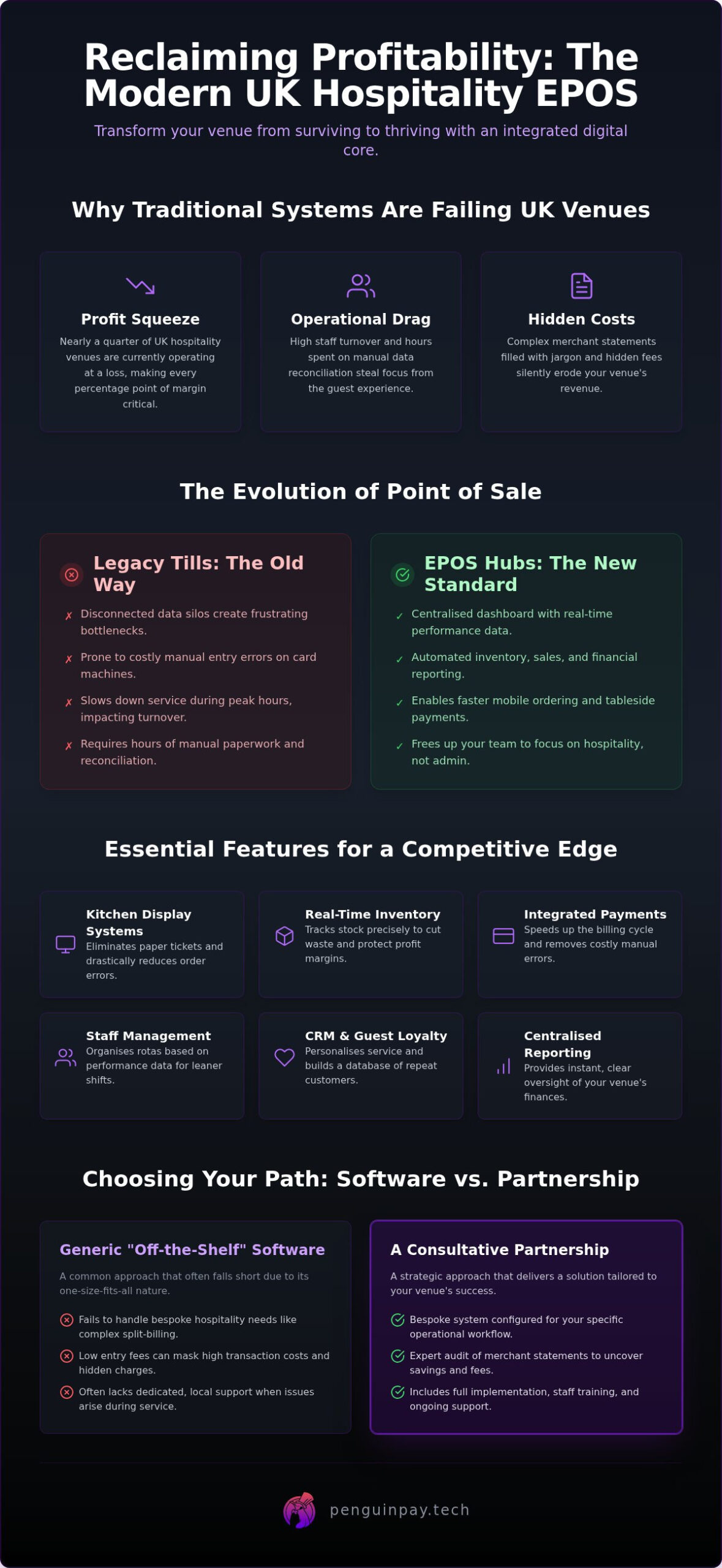
A hospitality EPOS is a system that synchronises front-of-house service with back-office administration. In the current UK market, where nearly a quarter of venues are operating at a loss according to mid-2026 industry data, these tools have evolved from simple cash drawers into sophisticated management hubs. Modern Point of Sale (POS) system technology allows operators to oversee every transaction, staff action, and inventory movement from a single dashboard. This centralised approach is vital for combating the persistent labour squeeze. By automating manual tasks and streamlining order flows, you’re able to run leaner shifts without compromising the guest experience.
The Evolution from Simple Tills to Integrated Digital Hubs
Legacy tills often create frustrating data silos that slow down service during peak hours. When your sales data doesn’t talk to your stock levels or your bank account, you’re forced into hours of manual reconciliation. UK venues are rapidly adopting cloud-based hospitality epos systems uk to solve this. These platforms enable mobile ordering and tableside payments, which are now standard expectations amongst British diners. Moving to Fully Integrated EPOS systems ensures that every pint poured or plate served is instantly reflected in your financial reporting. This level of precision helps you protect margins whilst your team focuses on hospitality rather than paperwork. It’s a shift from being a reactive business owner to a proactive strategist who understands the venue’s health in real time.
Essential Features for UK Hospitality POS Systems
Selecting the correct suite of features is about more than convenience; it’s a strategic necessity for survival. A recent UKHospitality report on technology highlights that innovation is the primary tool for navigating current economic headwinds. Kitchen Display Systems (KDS) are a cornerstone of this shift, as they eliminate the chaos of paper tickets and ensure order accuracy during high-pressure services. Similarly, robust inventory management allows you to track stock in real-time, which is essential for reducing waste and protecting your margins.
Beyond the kitchen, effective hospitality epos systems uk integrate staff management and CRM tools. By linking rotas directly to performance data, you can organise your team based on peak demand periods. Guest loyalty features further enhance this by building a database of customer preferences, allowing for a more personalised service that naturally encourages repeat visits.
Streamlining Operations with Integrated Payment Solutions
Manual entry errors on card machines are a silent drain on your venue’s revenue. By ensuring your EPOS is fully linked with your face-to-face card payments, you remove the risk of typos and speed up the bill-to-pay cycle significantly. This seamless connection is only effective if it’s backed by reliable card processing UK, which prevents the stress of system outages during a busy Saturday night. If you’re concerned about hidden costs in your current setup, we can help you audit your merchant statements to find a more efficient path forward.
Choosing the Right EPOS Strategy for Your Venue
Restaurant EPOS experts can help you assess why generic “off-the-shelf” software often fails because it cannot accommodate the specific nuances of bespoke hospitality workflows. A standard application might work for a simple retail shop, but it rarely handles the complex split-billing or table management required in a busy UK restaurant. Whether you’re operating a high-turnover venue in London or a country pub in Derbyshire and the Midlands, having access to local, expert support is a significant advantage. It ensures that technical issues don’t bring your service to a standstill. When reviewing your options, look for transparency in contract terms rather than just the lowest monthly fee. Low entry prices often mask high transaction costs or restrictive long-term commitments. For a deeper dive into these strategic choices, consult our Fully Integrated EPOS Systems: A Strategic Guide for UK Businesses in 2026.
Why Consultative Guidance Outperforms Generic Software Sales
Selecting hospitality epos systems uk requires more than just a software licence; it demands a partnership. An independent advisor can conduct a thorough audit of your current merchant statements, identifying hidden charges that bloat your overheads. This consultative guidance helps you link front-of-house sales to back-office banking and funding seamlessly. Beyond the initial purchase, the value of expert EPOS implementation cannot be overstated. It ensures your staff are trained and confident from day one, reducing the headaches often associated with new technology. To start building a system that truly supports your venue’s growth, book a consultation with PenguinPay today for a tailored, professional assessment.
Future-Proofing Your Venue’s Operations
Operating a successful venue in 2026 requires moving beyond legacy hardware to embrace a centralised management hub. By integrating your kitchen displays, inventory tracking, and payment terminals, you eliminate the data silos that often lead to operational stress and lost revenue. Selecting the right hospitality epos systems uk isn’t just about software; it’s about choosing a strategic partner who understands the local landscape in London and the Midlands. With over 28 years of IT expertise, we provide the consultative guidance needed to navigate complex merchant statements and bespoke workflows. Our process includes a full merchant statement audit to ensure you aren’t overpaying for your essential services. To secure your venue’s financial health and improve the guest experience, book your bespoke EPOS and payment consultation today. We’re here to help you build a more resilient, profitable business.
Frequently Asked Questions
What is the difference between a standard POS and a hospitality EPOS?
A hospitality EPOS includes niche features like table management, split-billing, and kitchen communication that a standard retail POS lacks. Whilst a standard system focuses on simple transactions, hospitality epos systems uk are designed for the high-pressure environment of restaurants and bars. They handle complex order flows and multi-course timing, ensuring front-of-house and back-office operations remain perfectly synchronised throughout a busy service.
How much does a hospitality EPOS system cost in the UK for 2026?
Costs vary significantly depending on whether you choose a basic software subscription or a full hardware bundle. Operators should consider both upfront hardware expenses and recurring monthly software fees. While entry-level plans might seem attractive, they often include higher transaction rates. It’s essential to evaluate the total cost of ownership, including payment processing and support, to ensure the system remains a sustainable investment.
Can I use my existing card machine with a new EPOS system?
It is technically possible, but using non-integrated card machines often leads to manual entry errors and slower service. For a truly efficient workflow, we recommend fully integrated systems where the terminal and EPOS communicate directly. This setup eliminates the need for staff to re-key amounts, reducing the bill-to-pay cycle. If you’re unsure about compatibility, a professional audit can determine if your current hardware can be repurposed.
Do I need an internet connection for my hospitality EPOS to work?
Yes, most modern hospitality epos systems uk require a stable internet connection to facilitate real-time reporting and cloud-based management. Whilst many systems offer an “offline mode” that allows you to continue taking orders during a temporary outage, the data only syncs once the connection is restored. Investing in a reliable network infrastructure is a foundational step for any venue looking to maintain consistent service.